
Using LDR Sensor in Smart Electronics Projects
Introduction
In today’s world of automation and smart technology, sensors play a major role in making electronic systems intelligent and responsive. One of the most widely used and beginner-friendly sensors is the LDR Sensor (Light Dependent Resistor).
An LDR helps electronic circuits detect light intensity and react automatically based on surrounding brightness. From automatic street lights to smart home systems, this small component powers countless real-world applications.
At Voltlei, we believe in making electronics simple, practical, and innovative — and the LDR sensor is a perfect example of how a tiny component can create smart solutions.
What is an LDR Sensor?
An LDR (Light Dependent Resistor) is a type of resistor whose resistance changes according to the intensity of light falling on it.
- More Light → Lower Resistance
- Less Light → Higher Resistance
This property allows circuits to sense environmental light conditions automatically.
How Does an LDR Work?
The working principle of an LDR is based on photoconductivity.
When light falls on the sensor:
- Electrons gain energy
- Conductivity increases
- Resistance decreases
In darkness:
- Conductivity drops
- Resistance becomes very high
This changing resistance is used in electronic circuits to trigger different actions.
Common Applications of LDR Sensors
1. Automatic Street Lights
Street lights automatically turn ON at night and OFF during daylight using LDR-based circuits.
2. Smart Home Automation
Used in automatic room lights, curtain systems, and intelligent lighting control.
3. Solar Tracking Systems
Helps solar panels align toward maximum sunlight for improved efficiency.
4. Mobile Brightness Control
Smartphones use light sensors similar to LDRs for adaptive screen brightness.
5. Security Systems
LDR sensors can detect interruptions in light beams for alarm systems.
Components Required for an LDR Project
If you are building a basic LDR project, you may need:
- LDR Sensor
- LED
- Resistor
- Breadboard
- Jumper Wires
- Arduino / ESP32 (optional)
- Power Supply
These components are commonly used in beginner electronics and IoT projects.
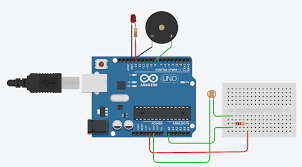
Simple LDR Circuit Example
Automatic Night Lamp
Working:
- During daytime → LED remains OFF
- During darkness → LED automatically turns ON
This is one of the easiest and most popular beginner electronics projects.
Advantages of LDR Sensors
- Low Cost
- Easy to Use
- Low Power Consumption
- Reliable for Light Detection
- Perfect for Automation Projects
Limitations of LDR Sensors
- Slower response compared to photodiodes
- Accuracy affected by environmental conditions
- Not ideal for precision light measurement
Why LDR Sensors are Great for Students
LDR projects are excellent for:
- School Projects
- Engineering Practicals
- IoT Learning
- Robotics
- Automation Experiments
They help beginners understand how sensors interact with real-world environments.
Future of Light-Based Automation
As smart systems continue evolving, light sensors will remain important in:
- Smart Cities
- Energy Saving Systems
- AI-Based Automation
- Smart Agriculture
- Intelligent Buildings
LDR sensors are simple, but they form the foundation of larger automation technologies.
Final Thoughts
The LDR sensor is one of the best components for anyone starting in electronics and automation. Its simplicity, affordability, and real-world applications make it an essential component for students, makers, and innovators.
At Voltlei, we aim to empower creators with components that transform ideas into reality — because innovation begins with experimentation.




Add comment